You answer a prospect, check stock with the warehouse, chase a site survey and then reopen a spreadsheet to update the quote. By closing time, the customer has a reply, but the CRM and finance records still need attention.
AI assistants for SMEs should do more than suggest what to do next. With appropriate integrations and permissions, they can complete repeatable tasks across departments while keeping consequential decisions with your team.
The useful measure of an AI assistant is not how many answers it produces, but how much verified work it completes. Delegate execution while keeping authority, approvals and accountability clear.

Connect the work, not just the software
Your existing tools may handle individual functions perfectly well. The friction appears between them: a revised order requires a CRM update, a stock check, a new quote and a notification to finance.
An integrated assistant can coordinate those steps without asking someone to copy the same information repeatedly. That depends on accessible data, supported interfaces and explicit rules—not simply adding a chat window.
Function The manual handoff Potential delegated action
B2B CRM Enter notes and remember follow-ups Record interactions and create next actions
Quotations Find prices and rebuild documents Draft quotes using approved pricing
Inventory and production Chase availability and progress Retrieve status and flag shortages
Tasks and internal knowledge Find guidance and brief colleagues Retrieve permitted sources and assign work
Finance Collect records and check balances Compile information and flag discrepancies
AI assistants for SMEs are most useful when they connect these activities into an accountable workflow. A broader solution does not necessarily mean replacing every system you already use.
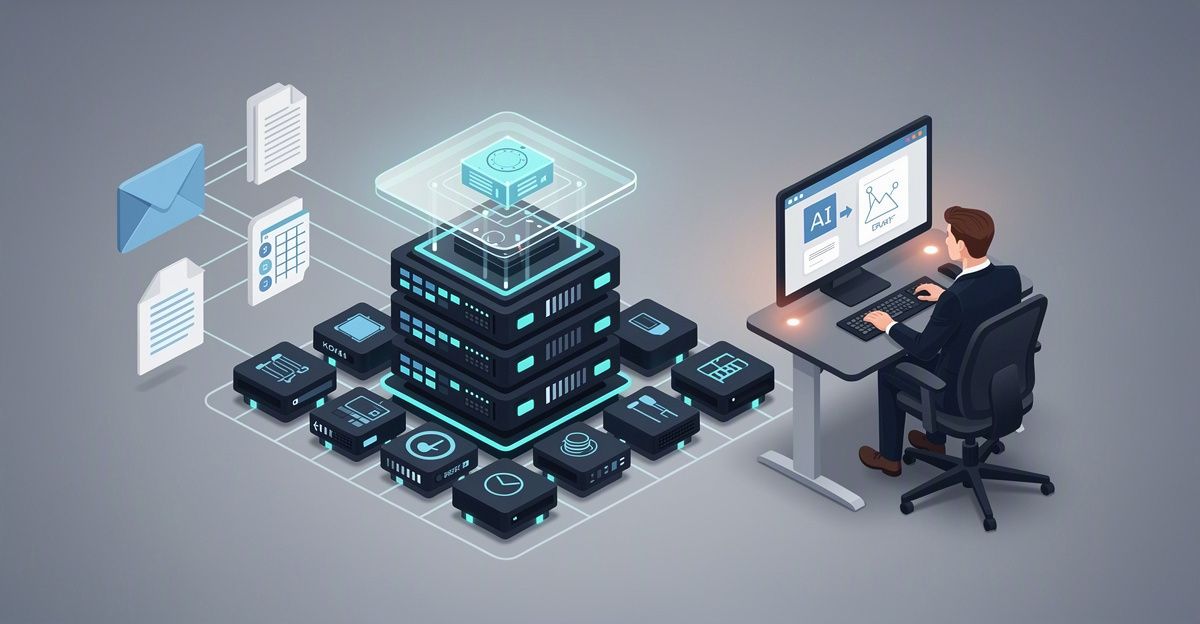
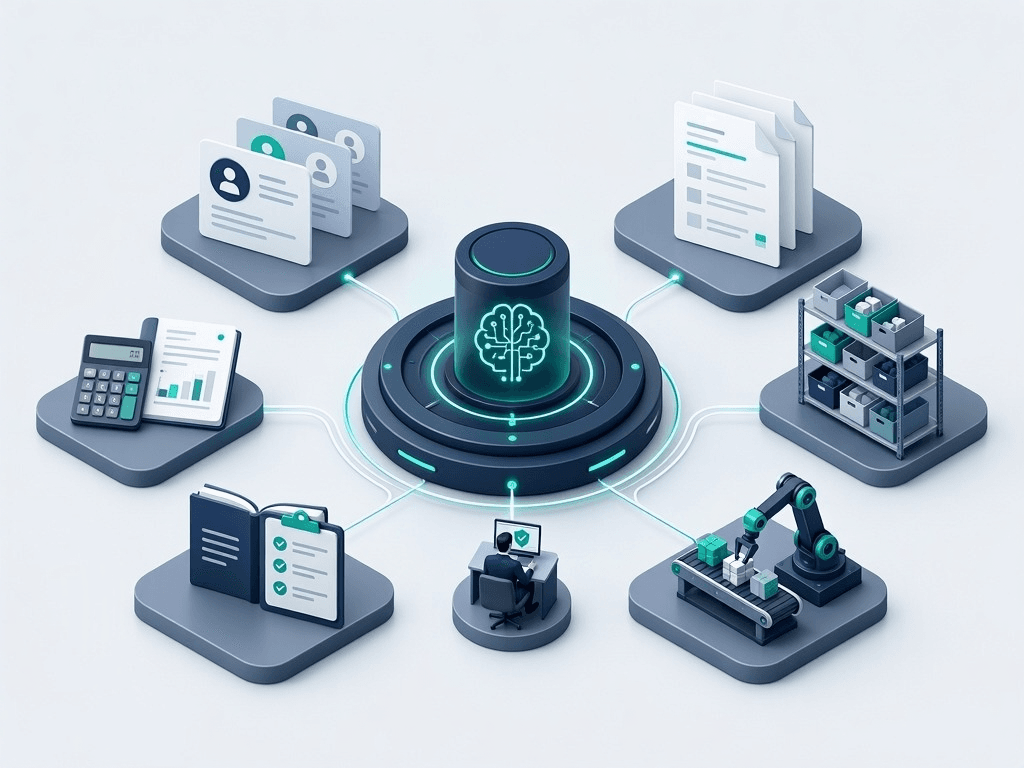 An AI assistant connects CRM, quotations, inventory, production, tasks and finance in one workflow.
What delegated work looks like across a sales cycle
Imagine your business supplies an industrial solution to an electronics manufacturer. A prospect requests a site survey, but the request lacks technical details and your engineering team is busy.
The pipeline Lead → Surveying → Pilot → Closed Won provides a structure for the next steps. Each transition should require defined evidence rather than an optimistic interpretation of a customer email.
- Lead: Create or update the account, check for duplicates, assign an owner and draft questions about missing requirements.
- Surveying: Prepare scheduling tasks, consolidate requirements and retrieve relevant internal guidance within the user's access rights.
- Pilot: Create the agreed test activities, track deadlines and summarize results against acceptance criteria.
- Closed Won: Update the stage only after valid confirmation, then initiate handover tasks and prepare information for billing.
Along the way, the assistant could prepare a quotation from an approved price list and flag supply constraints. It should not promise delivery dates or apply exceptional discounts without authorization.
A similar approach works for a distribution center or cold-storage provider: connect the service request, available capacity and delivery plan. The point is fewer missing handoffs, not another dashboard for employees to maintain.
Give the assistant responsibility without unlimited authority
A draft quotation and a bank transfer do not carry the same risk. Treating every action as equally autonomous creates avoidable exposure; requiring approval for everything removes much of the benefit.
Define three practical permission levels:
- Execute independently: Create routine tasks, send internal reminders and compile reports from authorized sources.
- Prepare for approval: Draft customer quotes, propose production changes and prepare external communications.
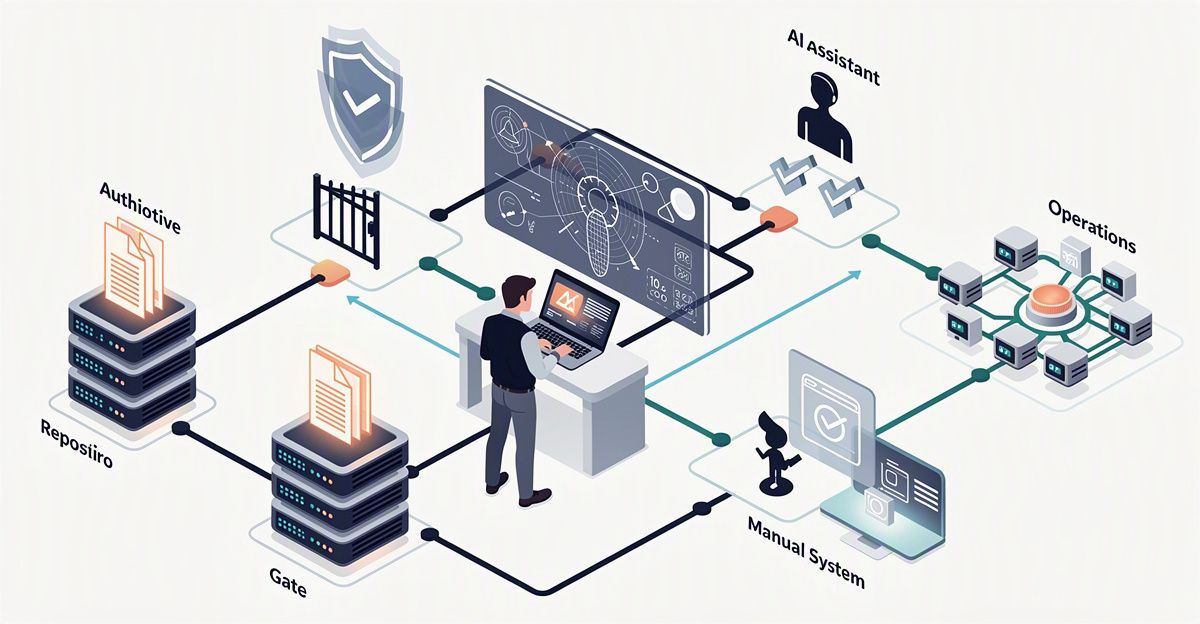
- Require explicit human control: Release payments, sign contracts, delete critical records or override safety procedures.
For AI assistants for SMEs, a reliable action history matters as much as a fluent response. Your team should be able to see which source informed an action, what changed and who approved it.
If a price list has expired or inventory data is stale, the assistant should flag the problem rather than invent an answer. Internal knowledge retrieval must also preserve document permissions; access to the assistant must not become access to confidential payroll or customer information.
Build in duplicate prevention, failure alerts and recovery procedures. A disconnected integration should leave a visible exception, not a silent gap in the workflow.
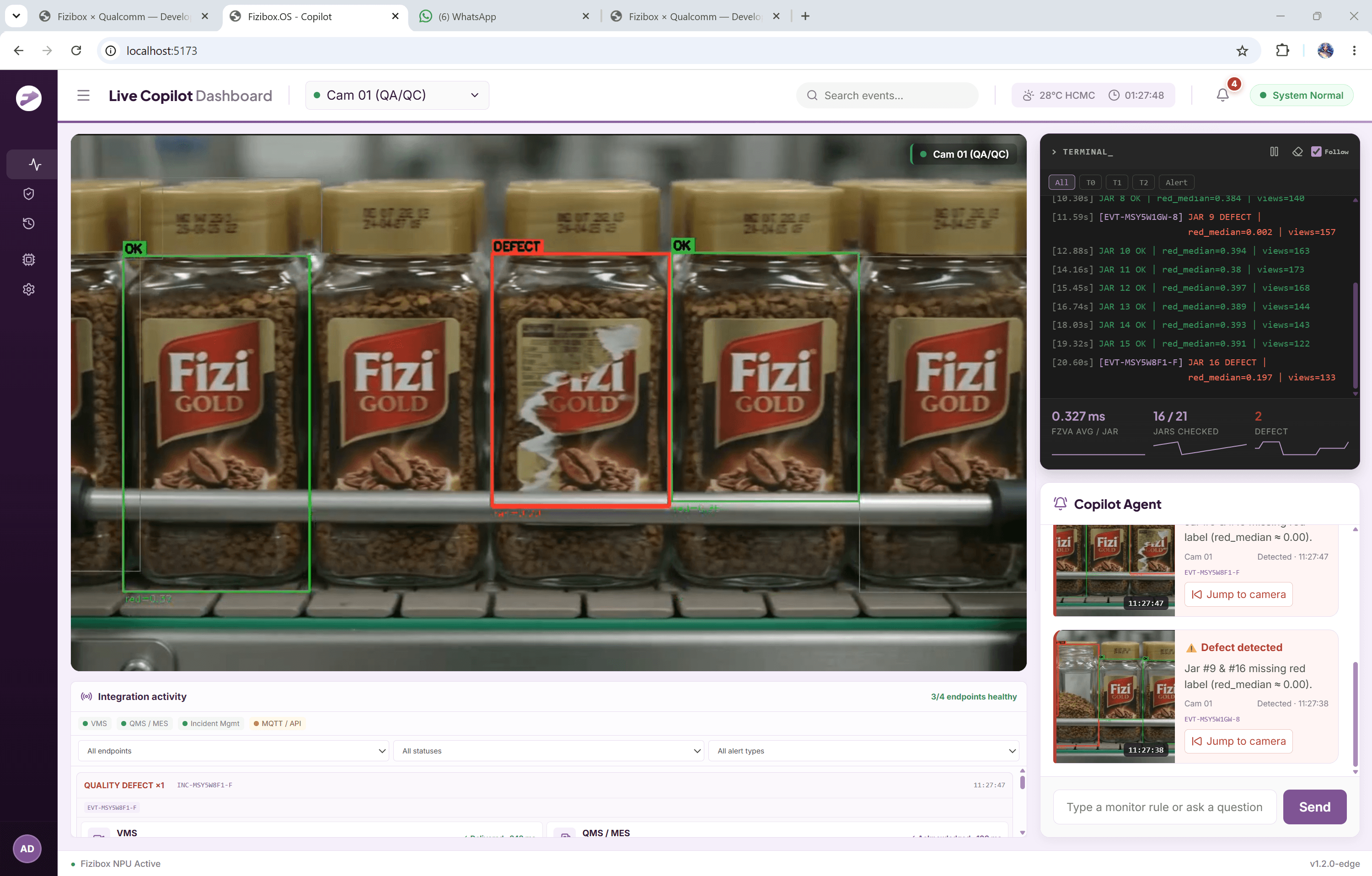
Start with one measurable workflow at Fizibox
You do not need to automate six departments at once. Start with a manageable sequence, such as capturing an inquiry, preparing a draft quote and assigning a survey task.
When discussing requirements with Fizibox, distinguish its product portfolio from the proposed assistant integration scope:
- Solutions: FAD and CID; hardware: FAD Node and CID Node.
- Software: FAD Application; SDKs: CNN SDK, VLM SDK and LLM SDK.
- Service: Insurtech Integration.
This portfolio should not be read as a claim that every component includes CRM, inventory or finance automation out of the box. Execution capabilities need to be confirmed against available APIs, data quality, access rights and operational requirements.
Priorities also differ by environment. Wood and textile manufacturers may start with request-to-supply coordination. Container ports, ICDs, weighbridges and parking facilities need clear operational ownership. Airports, stations and power plants require especially careful permission and safety boundaries.
For industrial property and fire insurers, data sharing needs an appropriate basis and a clearly defined purpose. An assistant should not independently make coverage or claims decisions.
Measure the pilot before expanding: quote preparation time, repeated data entry, on-time task completion and corrections required. Establish a baseline rather than assuming a percentage improvement. These measurements help you judge whether broader delegation is worthwhile.
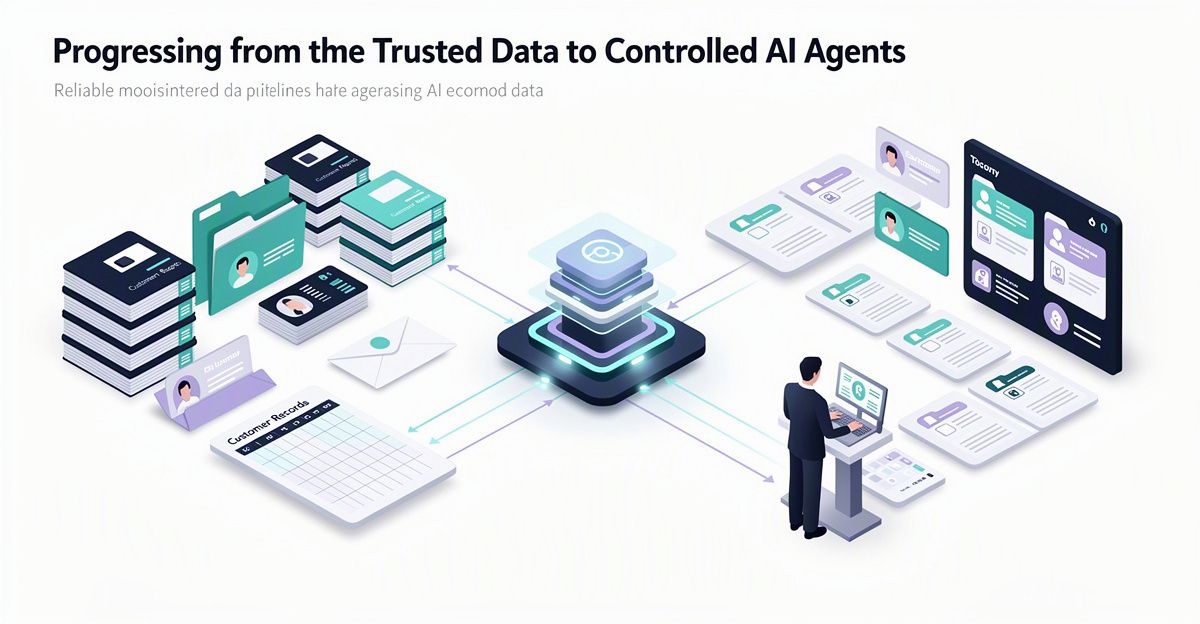
 An operations team and integration specialist review an AI assistant pilot before expanding its scope.
Frequently Asked Questions
- Do we have to replace our existing CRM? Not necessarily. First check whether its interfaces, permissions and data structure support the proposed workflow.
- Can the assistant run finance autonomously? It can help compile records, reconcile information and prepare recommendations. Payments and consequential financial decisions should remain subject to human approval.
- Which process should we start with? Choose frequent, repeatable work with dependable inputs and an easily verified output, such as moving from a sales inquiry to a draft quotation.
Ready to explore what AI assistants for SMEs could take off your team's plate? Visit fizibox.com to discuss your workflow, assess integration requirements and define a focused pilot with clear success criteria.