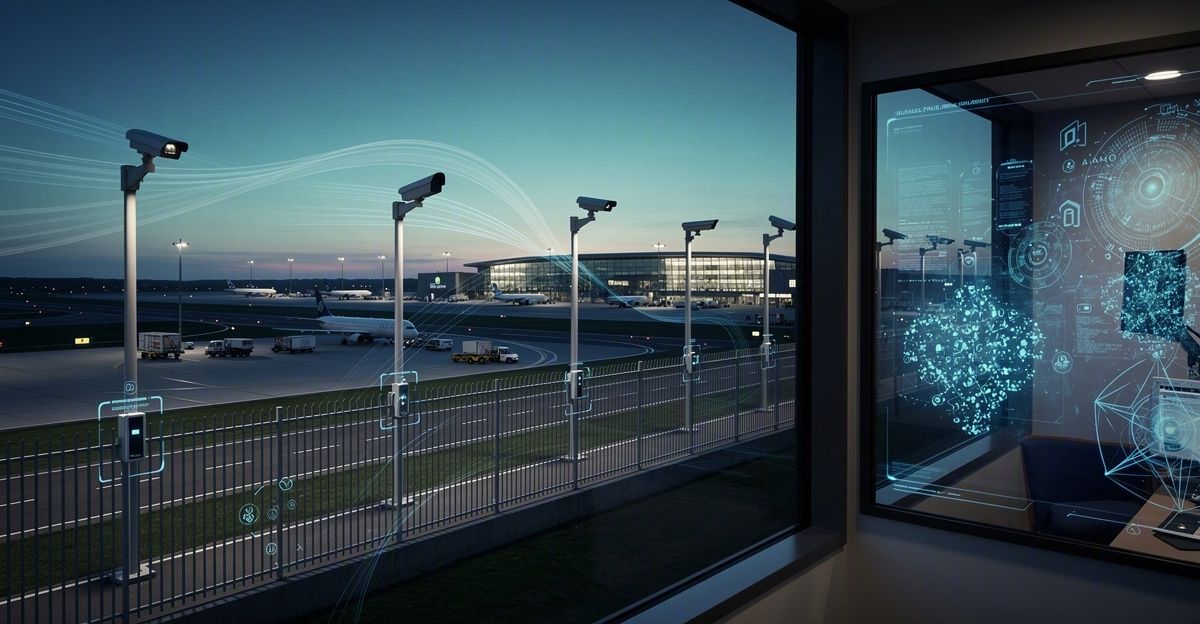
Your cameras may still work, your PLC may be reliable, and your quality team may know every product detail. Yet visual inspection can still miss emerging defects, depend too heavily on manual judgment, or reject good parts that should have continued down the line.
Learning how to integrate AI into existing production lines does not mean replacing every machine. A practical upgrade adds a Vision AI or vision-language model layer that analyzes images, communicates decisions to the PLC, and improves inspection without disrupting the core process.
The safest way to integrate AI into existing production lines is to begin with one high-value inspection point, reuse suitable equipment, and keep people in the decision loop during validation.

Where conventional inspection starts to struggle
Manual inspection can be effective at low volumes, especially when defects are obvious. As throughput rises, fatigue affects consistency, standards vary between shifts, and defect evidence is rarely captured in a structured form.
Rule-based machine vision also remains excellent for fixed measurements, positions, shapes, and colors. Its limitations become visible when lighting changes, surfaces reflect differently, products shift in the fixture, or a previously unknown defect appears.
Common signals that an upgrade is worth exploring include:
- High false-reject rates, causing good products to be scrapped or inspected again.
- Escaping defects that create customer complaints or expensive rework.
- Extensive rule and threshold adjustments for every new SKU.
- Inspection records without source images or batch-level traceability.
- Quality decisions that vary significantly between operators or shifts.
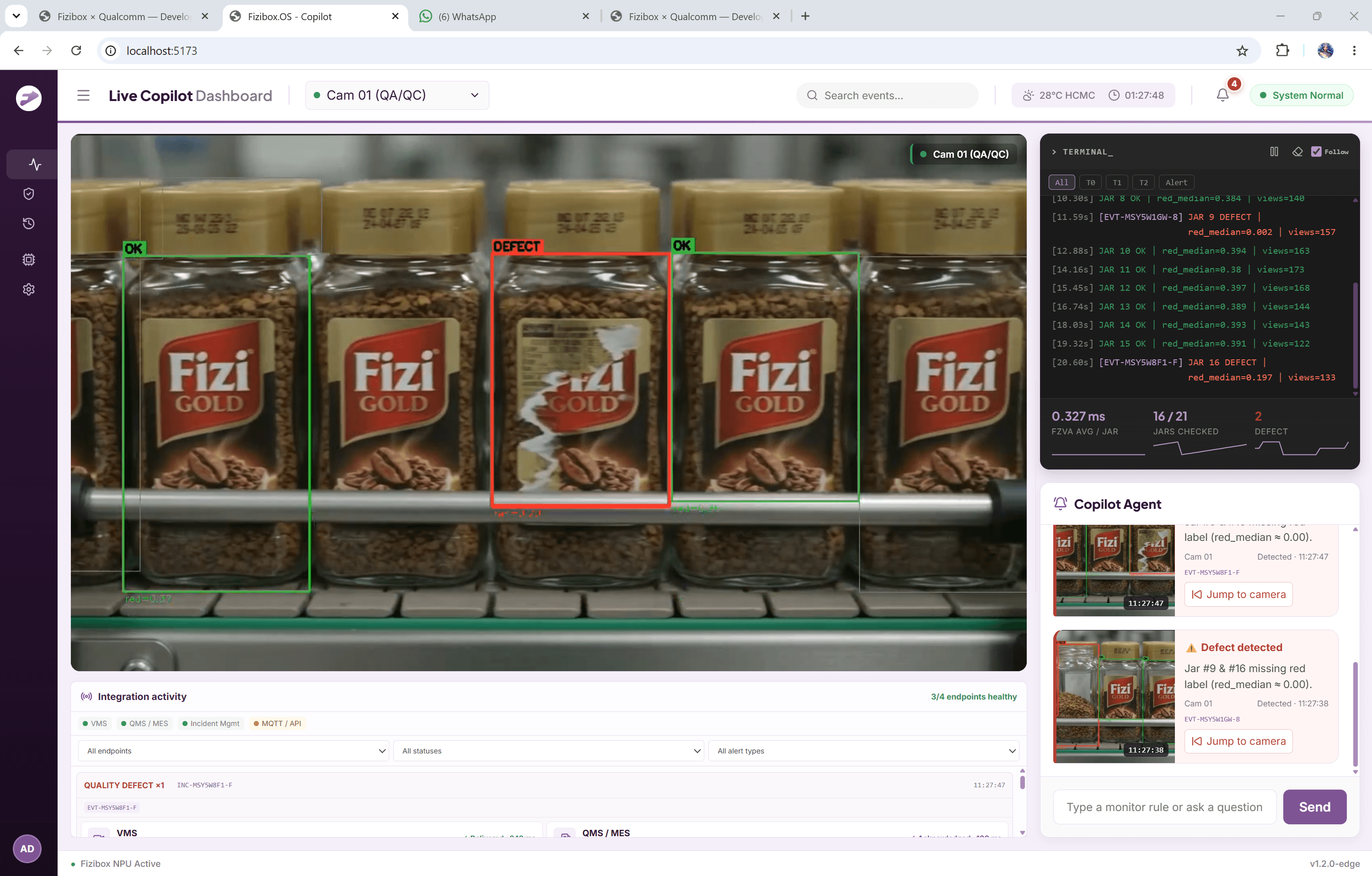
Before introducing AI, review the camera, lens, lighting, trigger, and product positioning. Stable image acquisition often delivers more value than moving immediately to a larger model.
Traditional Vision AI versus VLMs
Traditional Vision AI platforms, including tools such as Cognex VisionPro Deep Learning, typically train a model for a defined task such as classification, object detection, localization, or defect segmentation. They perform well when defects repeat, cycle times are short, and the imaging environment is controlled.
A vision-language model, or VLM, connects visual input with natural-language concepts. Instead of producing only a class label, it can compare an image with requirements such as the surface must have no cracks, the label must be centered, or every connector pin must be present.
| Criterion | Traditional Vision AI | Zero-shot VLM |
|---|---|---|
| Starting data | Usually needs labeled examples | Can start from instructions and reference images |
| New defect types | May require new data and retraining | More adaptable when the defect can be described |
| Inference speed | Often fast and edge-friendly | May require more GPU capacity and latency |
| Output | Score, class, box, or defect mask | Semantic assessment and natural-language explanation |
| Predictability | Strong inside the trained scope | Requires careful validation in real conditions |
| Best fit | Stable products and recurring defects | Many SKUs, rare faults, and flexible inspection needs |
Neither approach is universally better. A production system might use deterministic vision for dimensions, a specialized neural network for known defects, and a VLM for ambiguous or previously unseen abnormalities.
The most robust answer is often a hybrid inspection architecture, not an all-or-nothing technology choice.
How to integrate AI without disrupting production
Start with an inspection point where failures are costly but the scope remains manageable. Avoid connecting the AI output directly to the reject mechanism on day one; first run it in parallel and compare its decisions with your quality team.
A practical process for how to integrate AI into existing production lines looks like this:
- Define the inspection target: document defects, line speed, response time, and acceptable error rates.
- Assess existing hardware: confirm camera resolution, field of view, lighting, triggers, network access, and available mounting space.
- Add an integration layer: an edge computer captures images, runs inference, and sends OK/NG status plus defect codes to the PLC, MES, or traceability platform.
- Begin in shadow mode: the system records recommendations without rejecting products automatically, while operators verify uncertain cases.
- Measure production outcomes: monitor false rejects, false accepts, cycle time, manual reviews, and downtime.
- Scale gradually: enable automatic decisions only after performance remains stable across shifts, SKUs, machines, and environmental conditions.
Your go-live checklist should include:
- Storage for the original image, result, timestamp, product ID, and batch.
- Confidence thresholds and a route for manual review.
- Safe fallback behavior if the camera, AI computer, or network fails.
- A representative test set covering shifts, materials, suppliers, and normal variation.
- Change control for model versions, prompts, thresholds, and acceptance criteria.
This setup allows you to retain working PLCs and mechanical equipment while updating the AI layer independently. It also creates the traceability needed to understand why a product was accepted or rejected.
Does zero-shot really mean no training?
A zero-shot visual inspection solution can use quality instructions, defect descriptions, and a small number of reference images without retraining the foundation model from scratch. This is useful when defects are rare, product variants change frequently, or the factory has not yet built a large labeled dataset.
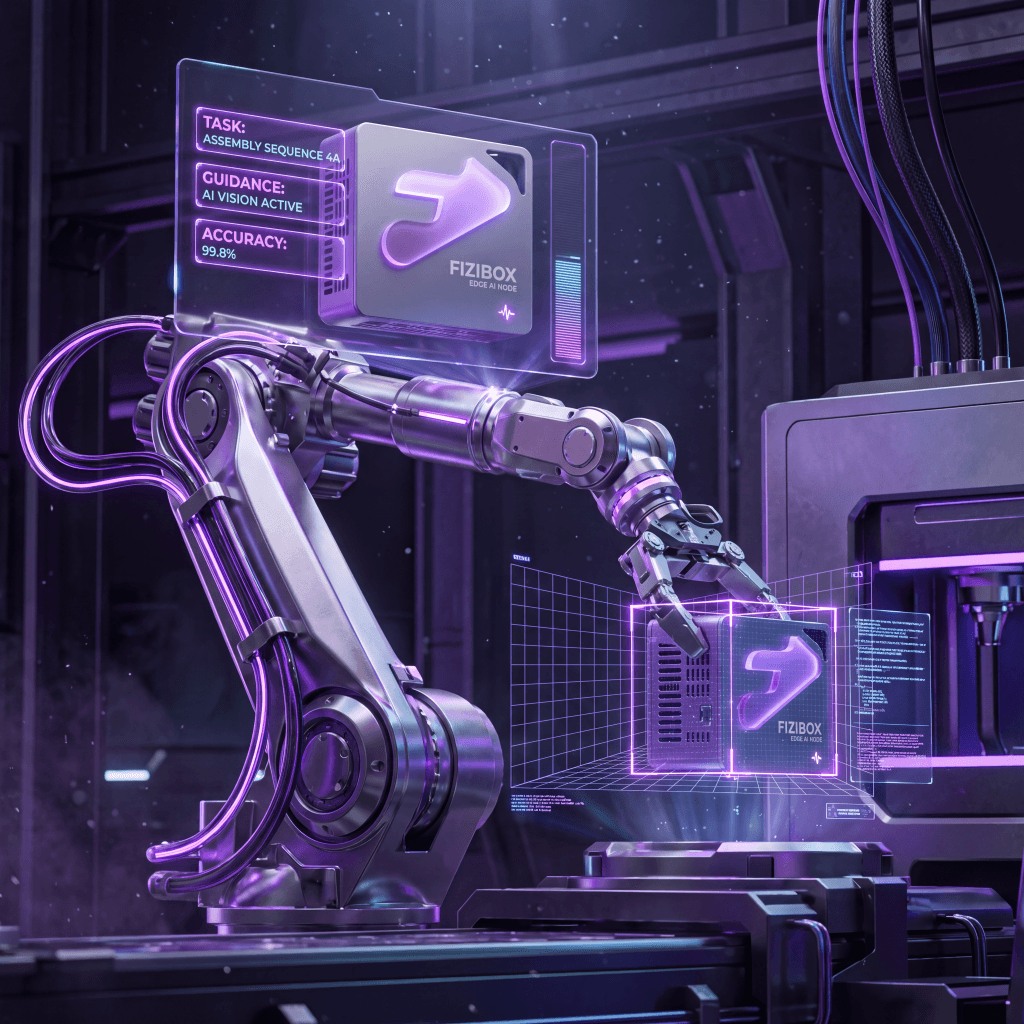
However, no model training does not mean no production testing. The system must still be evaluated with real factory images, edge cases, normal product variation, and clear safety boundaries before it controls rejection decisions.
To reduce false rejects, consider these practices:
- Separate outcomes into critical, cosmetic, and uncertain rather than forcing every case into OK or NG.
- Restrict analysis to relevant regions so fixtures and conveyors do not confuse the model.
- Capture multiple views of curved, reflective, or partially hidden components.
- Send low-confidence results to an operator instead of rejecting automatically.
- Review false-reject images regularly and adjust prompts, thresholds, lighting, or positioning.
Zero-shot technology shortens the starting phase, but production reliability still depends on good images, precise criteria, and continuous validation.
Frequently Asked Questions
- Do we need to replace existing cameras? Not always. Current cameras can remain if their resolution, frame rate, exposure control, and image quality reveal the target defects clearly.
- Can a VLM fully replace quality inspectors? Usually not at the beginning. It is better used to screen products, explain abnormalities, and help inspectors focus on difficult or uncertain cases.
- How long does a pilot inspection take? It depends on hardware access, defect complexity, and system connectivity, but a limited pilot is generally much faster and safer than replacing the entire inspection setup.
You do not need to launch a factory-wide transformation first. Choose one inspection point that creates excessive scrap or repeated manual reviews, then verify the business impact with production data. If you are deciding how to integrate AI into existing production lines, the team at fizibox.com can assess your imaging setup, design a Vision AI or VLM solution, and help you deploy it in controlled, measurable stages.