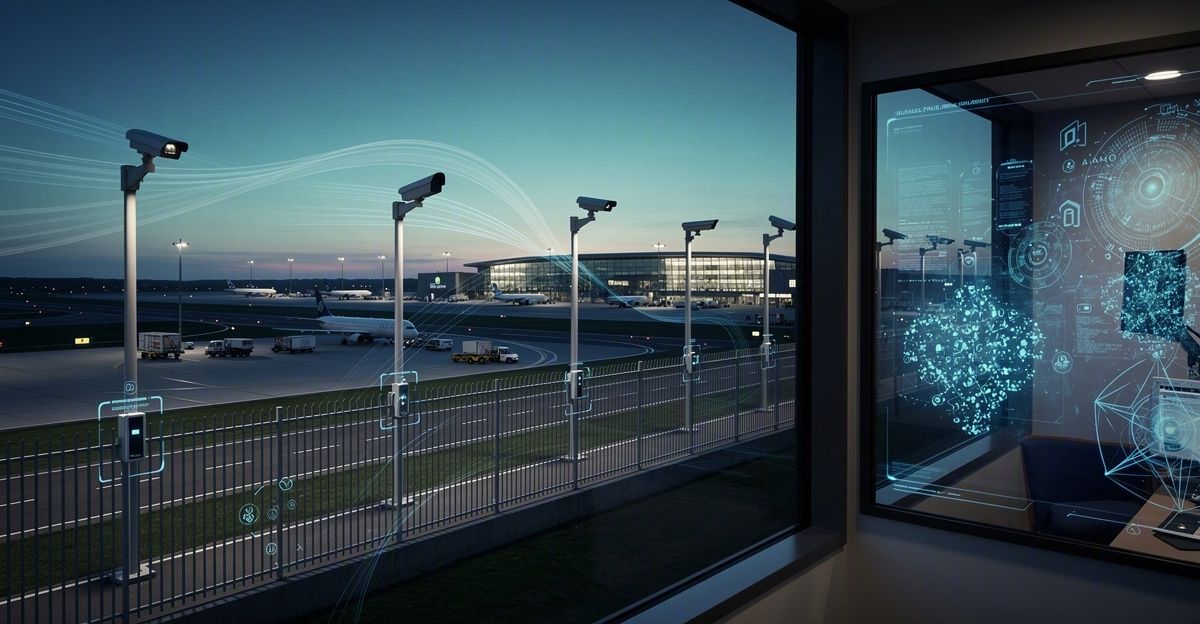
Cities are adding more cameras, IoT sensors, control centers, and real-time data platforms to make transport safer and more responsive. Yet one practical challenge remains: when hundreds or thousands of cameras are running, who can watch everything and react fast enough?
This is where Edge AI for smart transport becomes useful. Instead of pushing every video stream back to a central system for analysis, AI can run close to the camera, detect important events, and send only clean alerts or metadata to the operations center.
The real value is not simply adding more cameras. It is turning existing cameras into active sources of real-time alerts. For Fizibox, the right role is the edge AI/IoT and data integration layer, not the main contractor for an entire smart transport infrastructure program.

Cameras should do more than record footage
Many transport and security camera networks are still used mainly for monitoring and storage. That is helpful, but it is not enough when operators need early warnings for congestion, accidents, smoke, fire, or unusual situations.
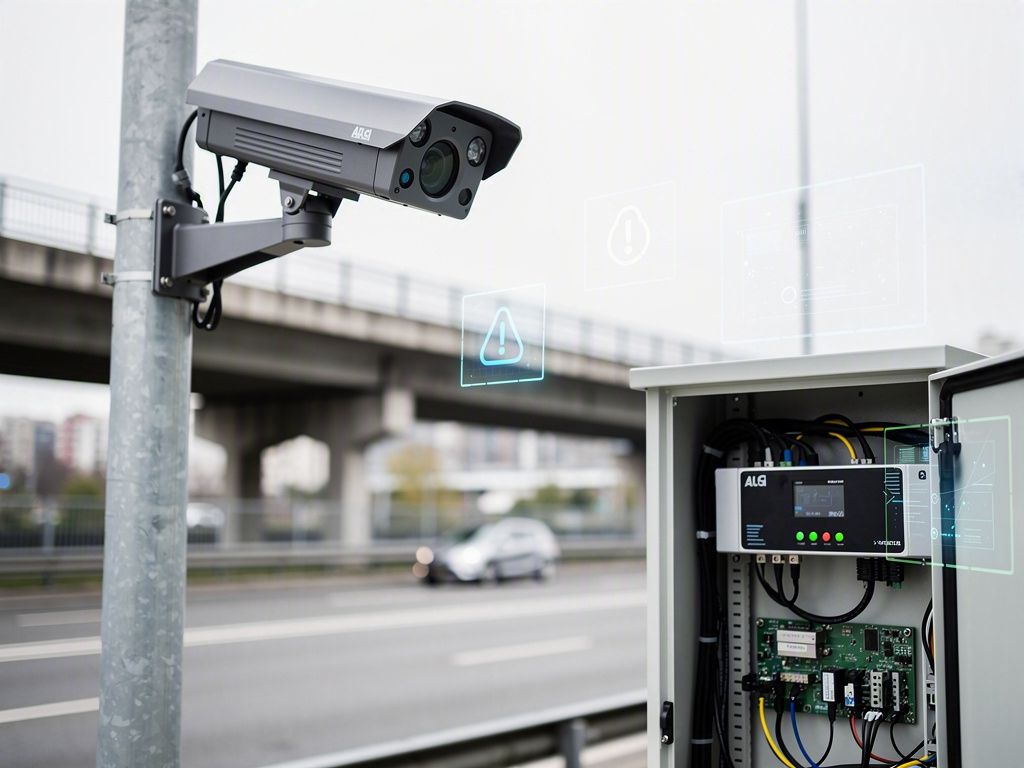 Traffic camera connected to an edge AI device in a roadside cabinet
With Edge AI for smart transport, processing devices are placed near cameras or inside technical cabinets. Video is analyzed locally, and the system sends back structured information such as event type, time, location, alert status, or metadata.
This approach works especially well in places where fast response matters:
- Underpasses and overpasses: smoke/fire detection, stopped vehicles, obstacles.
- Parking areas and bus depots: fire risk alerts and operational safety monitoring.
- Ports, ICDs, and logistics hubs: incident alerts and risk-area supervision.
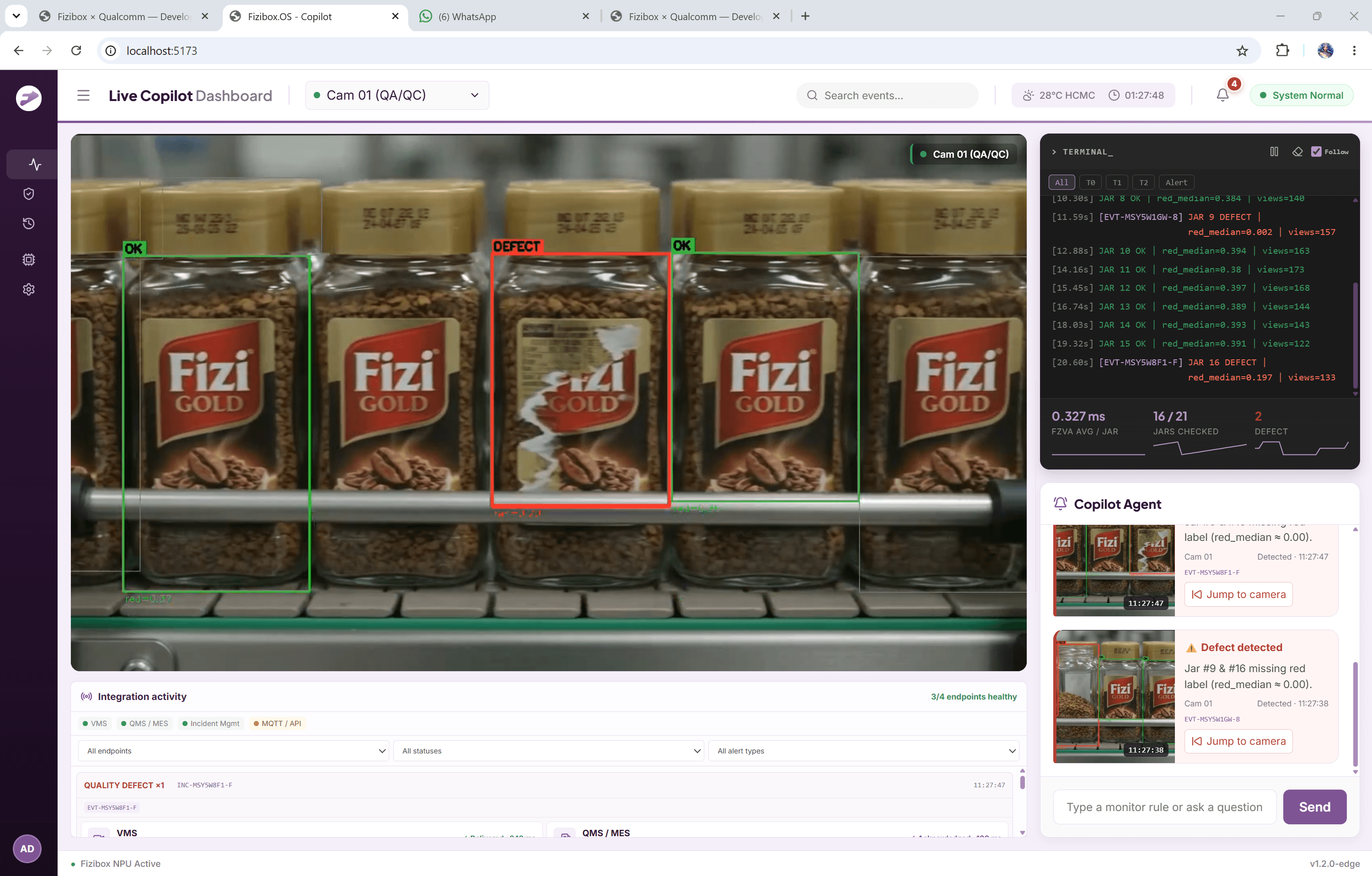
- Airports and internal roads: early warnings for abnormal situations.
- Major intersections: event analysis to support traffic coordination.
In simple terms, cameras should not only show what happened. They should help you know what is happening now.
Why edge processing is the right entry point
If you operate transport, security, or large parking infrastructure, sending all video streams to a central server can overload bandwidth, storage, and monitoring teams. Edge processing reduces that burden by moving intelligence closer to the data source.
Fizibox can fit into the layer of camera/sensor → edge AI → clean event data → operations center. This is a clear, integration-friendly position that complements existing traffic management platforms instead of replacing them.
| Operational need | How edge AI helps | Value for you |
|---|---|---|
| Monitor many cameras | Analyze video near the camera | Reduce reliance on manual screen watching |
| Send fast alerts | Transmit events instead of full video | Lower response latency |
| Control bandwidth | Send metadata and alerts only | Reduce pressure on network links |
| Work with existing systems | Provide APIs or event streams | Avoid creating another data silo |
| Start small | Pilot with a few cameras | Measure value before scaling |
Devices such as FAD Node Q6, FAD Node Q8, and FAD Node R3 can support single-camera points, small clusters, or stronger processing needs depending on the environment. Software layers such as Fizibox OS and FZCMS 2026 help manage edge devices, configurations, system status, and alerts.
For system integrators, SDKs such as FZCNN Q6 and FZCNN Q8 can also be useful when AI capability needs to be embedded into an existing traffic, security, or video management platform.
Where to start for visible impact
Smart city programs can become slow when the first step is too broad. A better approach is to start with a clear pain point, a high-risk location, and measurable results.
One practical starting point is AI-based smoke and fire alerts for transport infrastructure and operational facilities. The reason is simple: fire-related incidents require early detection, and no team can reliably watch every camera at every moment.
You can start with locations such as:
- Underpasses or technical stations where safety requirements are high.
- Public parking areas or bus depots with dense vehicle activity.
- Ports, airports, and logistics zones that need continuous monitoring.
- Existing camera clusters where compatible video streams are already available.
Another useful direction is to upgrade existing cameras. If the current cameras support suitable video streams, FAD Node devices can be added at the edge without replacing the entire camera infrastructure.
That is an important message behind Edge AI for smart transport: you do not always need to rebuild from scratch. You can add an intelligent processing layer on top of the infrastructure you already have.
How to run a focused 30–60 day pilot
A small, well-measured pilot is often more convincing than a large plan with too many assumptions. For infrastructure operators or system integration partners, Fizibox can support a 30–60 day pilot to validate technical and operational value.
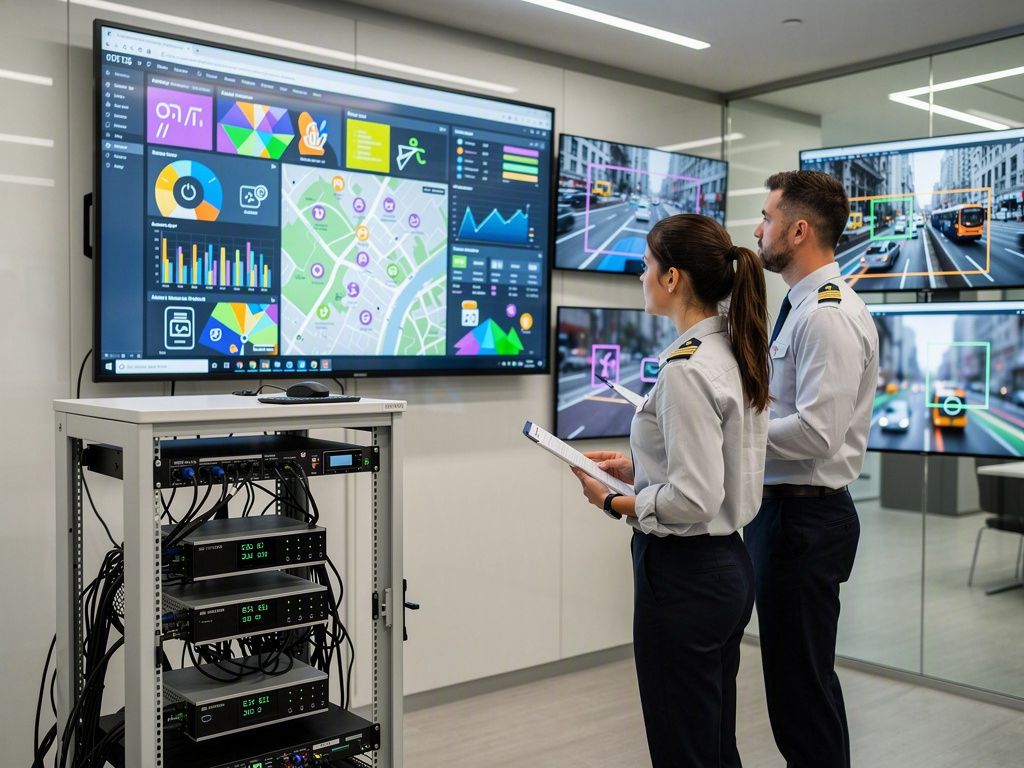 Pilot setup for smart transport Edge AI with edge nodes and alert dashboard
A focused pilot may include:
- 2–5 cameras in an area with clear safety or alerting needs.
- 1–2 FAD Node devices installed near cameras or inside a technical cabinet.
- FZCMS 2026 for device monitoring, configuration, and alert tracking; or APIs for integration with an existing system.
- A final report covering detected events, stability, latency, and integration results.
Useful pilot metrics include:
| Metric | Why it matters |
|---|---|
| Number of detected events | Shows whether the system produces useful signals |
| Alert latency | Directly affects response time |
| Device stability | Indicates readiness for long-term operation |
| Bandwidth savings | Demonstrates the benefit of edge processing |
| Integration readiness | Confirms that events can flow into the operations center |
Data governance should be addressed early as well. You should define what is processed at the edge, whether video is stored or only events are recorded, who can access the system, how logs are kept, and how event data is shared.
With Edge AI for smart transport, the goal is not to create another isolated dashboard. The goal is to provide clean event data that operations centers, VMS platforms, or partner systems can use more effectively.
Frequently Asked Questions
- Does Edge AI for smart transport require replacing all cameras? Not necessarily. If existing cameras provide compatible video streams, edge devices can be added to generate alerts.
- Does Fizibox replace the traffic operations center? No. Fizibox is better positioned as the edge AI layer that produces events and alerts for integration into existing systems.
- Where should a pilot begin? Start with high-risk, easy-to-measure locations such as underpasses, parking areas, depots, ports, airports, or logistics facilities.
Conclusion: The opportunity for Edge AI for smart transport is real, but the best path is specific and measurable: edge-based alerts, clean data integration, and small pilots before wider rollout. If you want to turn existing cameras into a smarter alerting system, explore FAD Node, Fizibox OS, and FZCMS 2026 at fizibox.com.