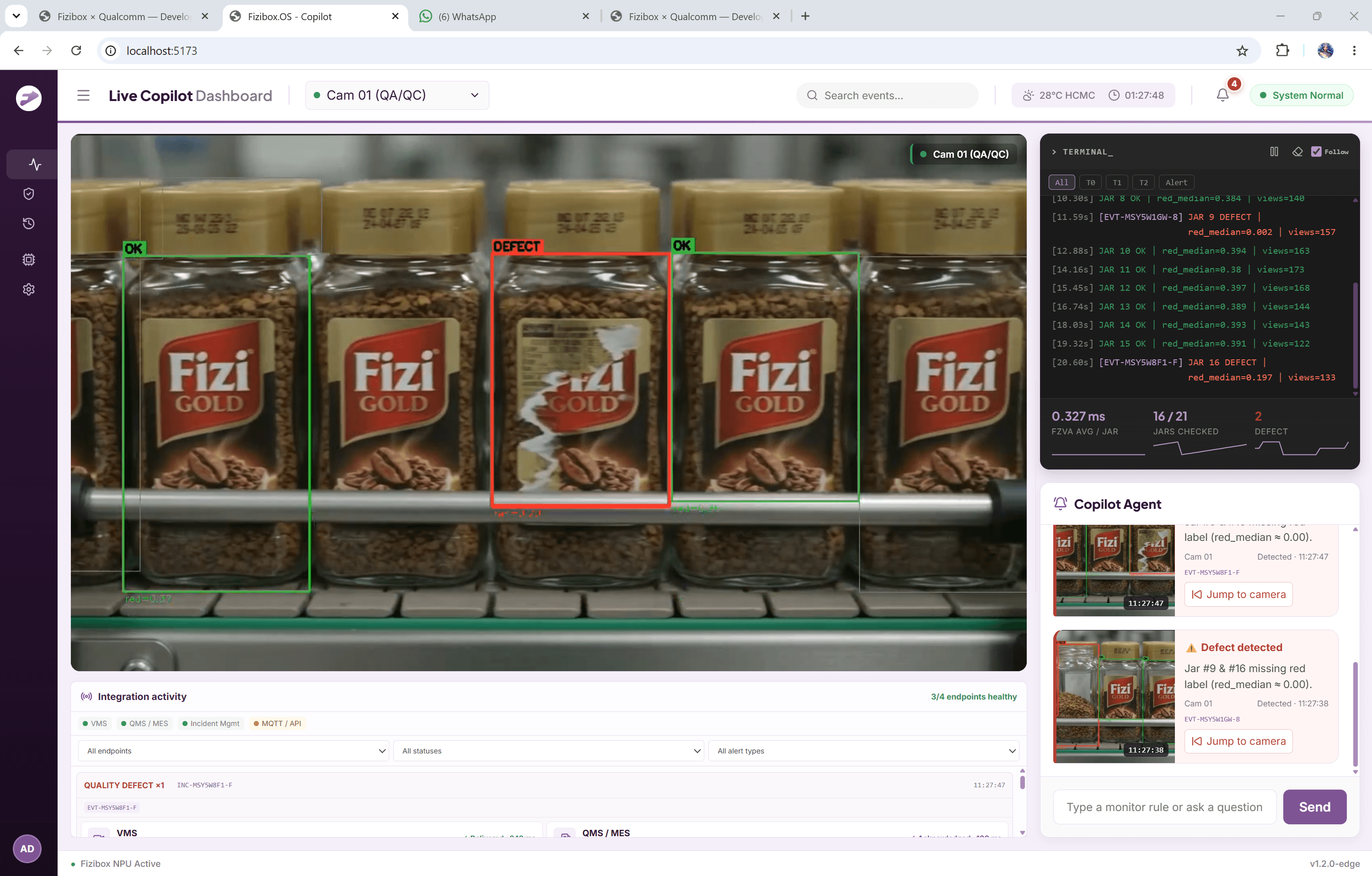
If you are about to enter university, you may be asking a big question: do you have to major in Artificial Intelligence to work in AI? The short answer is no. But if you want to build a long-term career, you need the right foundation: math, programming, data, and a real application domain.
Over the next 5–10 years, AI will be much more than chatbots and image generators. It will move into law, healthcare, finance, logistics, manufacturing, airports, cameras, robots, and edge devices. That is why an AI career path should start with seeing AI as a core capability, not just a narrow major.
You do not need one perfect major to enter AI. What matters is how you combine AI with a domain where real problems need to be solved.

AI is bigger than an AI degree
If you can study Artificial Intelligence, Computer Science, Data Science, or Computer Engineering at a strong university, that is a solid choice. But students from law, medicine, finance, logistics, mechatronics, or industrial engineering can also build meaningful AI careers.
The most valuable AI work often happens at the intersection of technical skills and domain expertise.
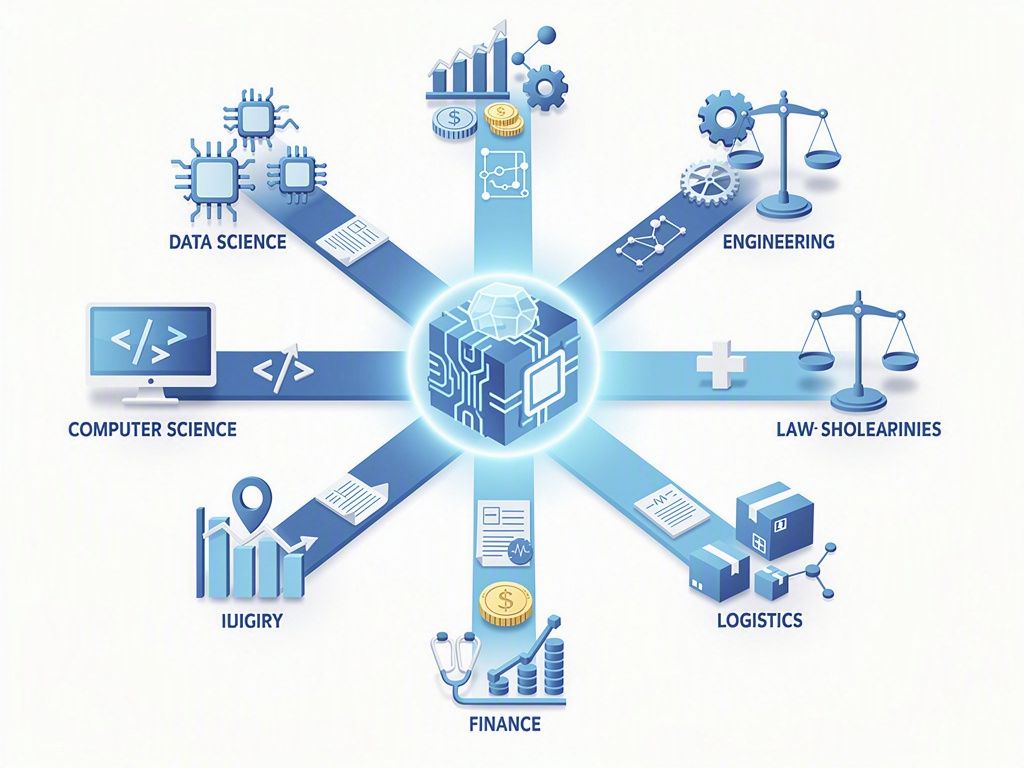 Different study paths can lead to AI careers
| Study direction | Possible career outcomes |
|---|---|
| Computer Science / AI | AI Engineer, Machine Learning Engineer, LLM or Vision Engineer |
| Computer Engineering / Electronics | Edge AI Engineer, Robotics Engineer, IoT Engineer |
| Math / Statistics / Data | Data Scientist, Research Engineer, Forecasting Specialist |
| Law / Healthcare / Finance / Logistics | AI Product, AI Consultant, LegalTech, HealthTech, FinTech |
For example, a law student who understands AI can work on personal data, technology contracts, AI-generated content rights, or enterprise AI risk control. A mechatronics student who learns AI may move into robotics, drones, or factory automation.
So when you think about your AI career path, do not only ask which major is trending. Ask which field gives you a unique edge when AI becomes a common tool.
Build the foundation early
AI has many branches, but the early foundation is surprisingly similar. If you are just starting out, focus on four core skills before chasing trends such as LLMs, agents, or fine-tuning.
- Python: essential for almost every AI direction.
- Git/GitHub: important for code management and portfolio building.
- SQL: because AI is always connected to data.
- Technical English: needed for documentation, repositories, papers, and GitHub issues.
You should also learn enough math to be useful: linear algebra, probability, statistics, calculus, optimization, vectors, matrices, and gradients. You do not need to become a mathematician in year one, but without math, it is difficult to grow into deeper technical roles.
A practical learning order could look like this:
- Basic Machine Learning: regression, classification, clustering, decision trees.
- Deep Learning: neural networks, CNNs, RNNs, or Transformers.
- Computer Vision or NLP depending on your interest.
- LLMs, VLMs, RAG, and agents after you understand data and model evaluation.
Do not rush into fine-tuning LLMs before you understand datasets, loss functions, overfitting, and evaluation. Learning fast is useful, but learning the foundation makes you durable.
AI roles worth exploring
Once you have the basics, you can choose a more focused direction. Each AI role has a different working style, skill set, and career environment.
| Career direction | Main work | Skills to build |
|---|---|---|
| AI / ML Engineer | Build models, train, deploy APIs, improve performance | Python, PyTorch/TensorFlow, ML/DL, basic MLOps |
| Data Scientist | Analyze data, forecast, build dashboards, run A/B tests | SQL, Python, statistics, data visualization |
| Computer Vision Engineer | Process images/video, detect objects, build camera AI | OpenCV, CNNs, YOLO, real-time video processing |
| Edge AI Engineer | Run AI on cameras, chips, and IoT devices | C/C++, Linux, ONNX, model optimization, hardware basics |
| AI Product Manager | Define problems, test quality, coordinate engineers, measure value | AI basics, product thinking, data, technical communication |
If you enjoy algorithms and coding, core AI engineering may be a good fit. If you like cameras, robots, sensors, and the physical world, Edge AI / Embedded AI is harder but highly valuable. If you enjoy business, law, or operations, AI Product or AI Consulting may fit you better.
In real companies, AI does not live only in notebooks. It must handle real data, real errors, real latency, and real constraints. A model with 95% accuracy may still fail if it produces too many false alarms or cannot run reliably in production.
A four-year roadmap for a real portfolio
A clear plan helps you avoid random learning. Here is a simple way to think about your university years.
 Student building an AI portfolio through real projects
| Stage | Goal | What to do |
|---|---|---|
| Year 1 | Build the base | Python, Git, math, basic SQL, 5–10 small projects |
| Year 2 | Choose a direction | Basic ML, PyTorch, real datasets, hackathons, focused projects |
| Year 3 | Build products | Deploy models, learn APIs and basic Docker, create 1–2 deeper projects |
| Year 4 | Prepare for work | Internship, real thesis project, CV/GitHub/LinkedIn, interview practice |
In year one, your projects can be simple: cat/dog image classification, house price prediction, a small chatbot, a data dashboard, or traffic sign recognition with OpenCV. The goal is not to build something huge. The goal is to understand the path from data to result.
By year three, you should aim for more serious projects. For example: a smoke/fire detection system that takes video input, identifies suspicious regions, sends alerts through an API or Telegram, and measures latency and false alarm rate. This type of project is much stronger than copying an online notebook.
A good AI portfolio should include:
- Clear data sources and data processing steps.
- A working model, interface, or API.
- Evaluation with concrete metrics.
- Notes on errors, limitations, and possible improvements.
- A clean README on GitHub.
This is a key part of an AI career path because employers want to see what problems you have actually solved, not only how many certificates you collected.
Frequently Asked Questions
- Do I have to major in Artificial Intelligence to work in AI? No. You can study Computer Science, Data Science, Computer Engineering, or a domain major, then add AI skills.
- What should a first-year student learn first? Start with Python, foundational math, SQL, and technical English. These skills keep many AI directions open.
- Should I learn LLMs immediately? You can explore them, but do not skip ML, data handling, model evaluation, and APIs. A weak foundation makes real products harder to build.
In the end, the better question is not which major will protect you from AI. It is: what field will you combine with AI to build skills that are hard to replace? If you are exploring AI learning paths, AI products, or enterprise AI solutions, visit fizibox.com to see how Fizibox brings AI, software, and digital transformation into real-world business problems.