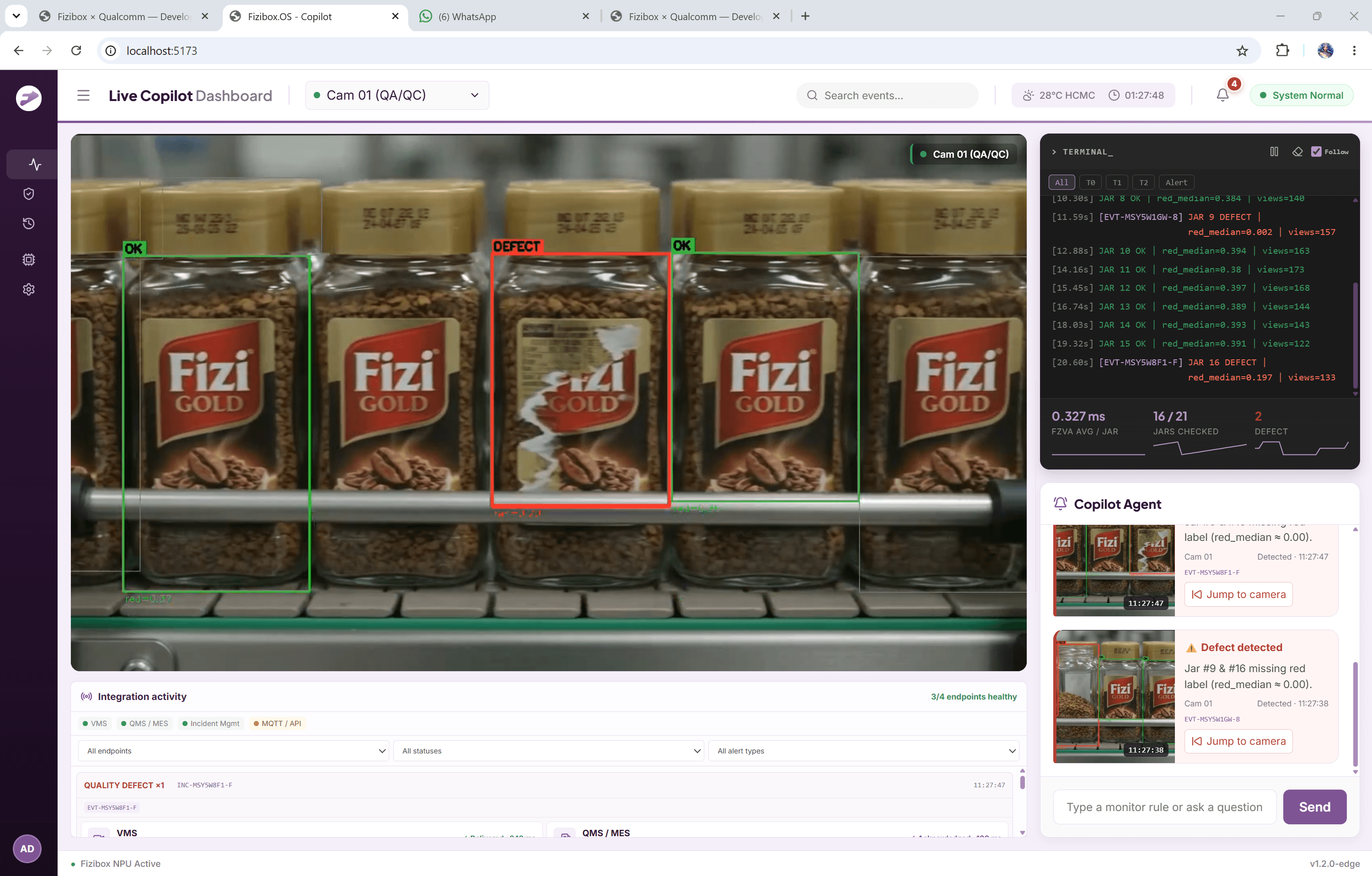
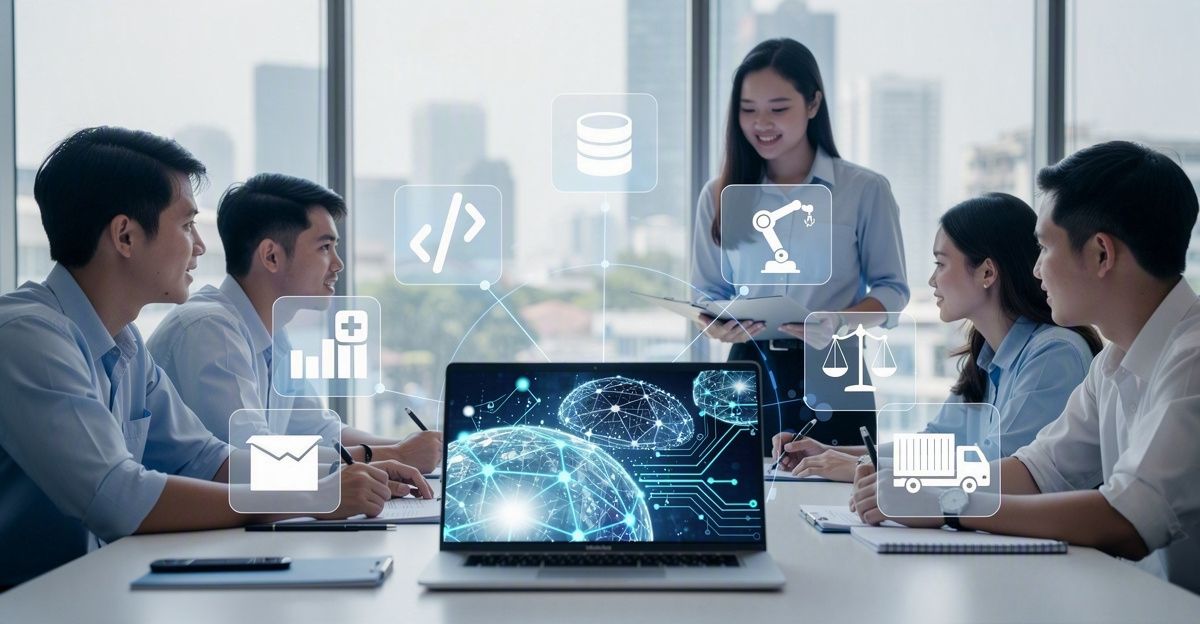
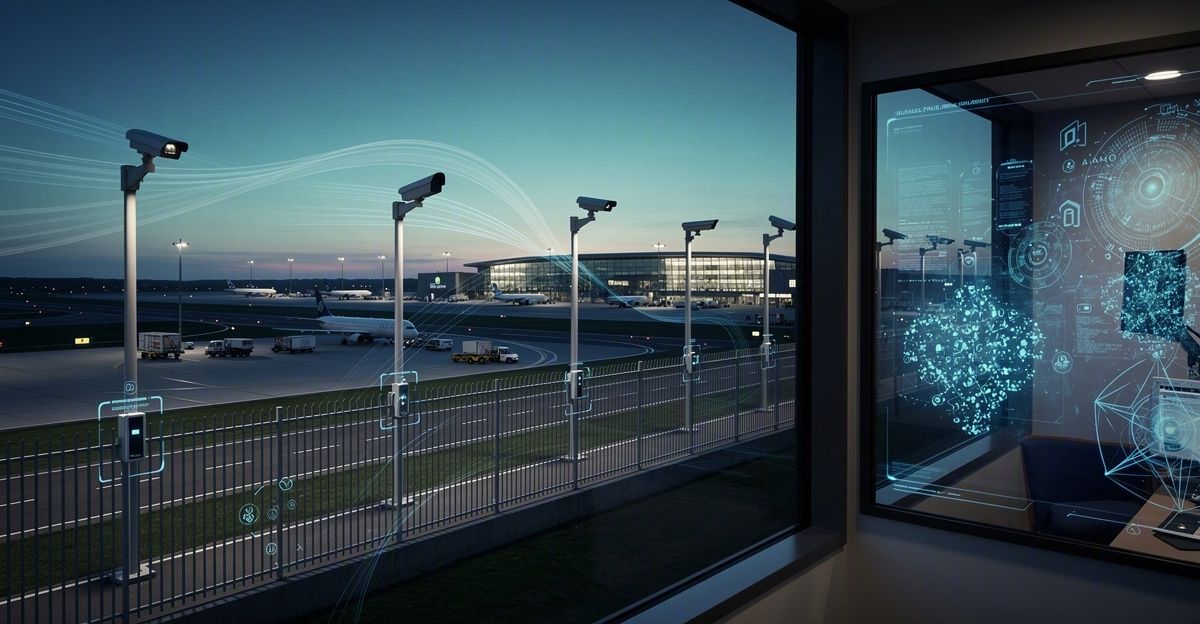
For years, enterprise AI has been associated with the cloud: send data to a remote server, wait for a model to process it, then receive the result. That approach is powerful for large-scale analytics, but it is not always ideal for real-world operations where milliseconds, connectivity and privacy matter.
Think about a production camera detecting defects, a self-service kiosk during peak hours, or a medical device that must alert clinicians at the bedside. If every decision depends on a stable network and a distant data center, both user experience and operational efficiency can suffer.
Edge AI moves intelligence closer to where data is created, enabling faster responses, stronger privacy and less dependence on constant Internet access. For businesses, it turns real-time data into real-time action instead of another file waiting to be uploaded.

Why companies are rethinking cloud-only AI
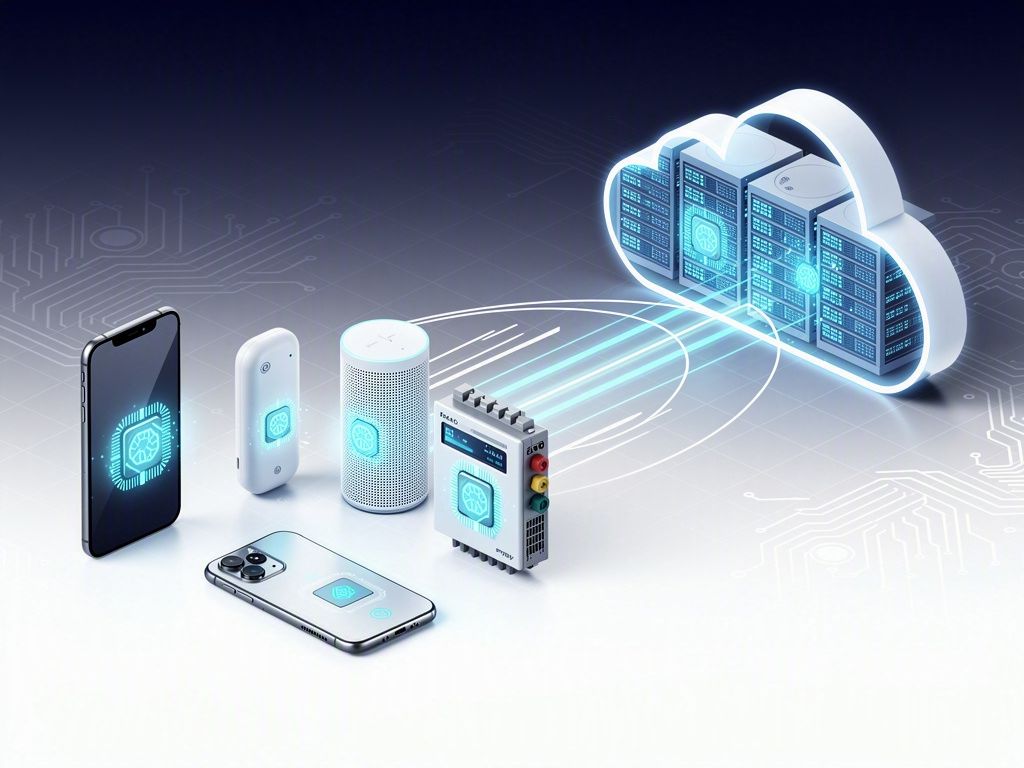 Illustration of Edge AI processing data locally instead of relying entirely on the cloud
Cloud AI is still essential. It is excellent for training large models, consolidating data from many sources and running heavy analytics. But not every piece of enterprise data should travel to the cloud before it becomes useful.
The common bottlenecks are latency, bandwidth cost and sensitive data exposure. Video feeds, medical images, factory signals and identity data can be expensive and risky to transmit continuously.
A practical way to look at Edge AI is this: it is best suited when your business needs decisions to happen near the source of data.
- Near-instant response: defect detection, safety alerts, access control or anomaly recognition.
- Lower bandwidth usage: process raw data locally and send only events, summaries or exceptions.
- Better privacy posture: reduce how often sensitive data leaves the device or facility.
- More resilient operations: keep critical services running even when connectivity is unstable.
| Processing model | Best for | Key advantage | Watch out for |
|---|---|---|---|
| Cloud AI | Training, large-scale analytics | Massive compute and scalability | Network dependency and latency |
| Edge AI | Real-time inference on devices | Speed, privacy and bandwidth savings | Requires model and hardware optimization |
| Hybrid edge + cloud | Balanced enterprise deployments | Flexible and cost-effective | Needs careful data flow design |
Edge AI is not just a smaller model on a smaller device
A common misconception is that edge intelligence simply means compressing a large AI model and placing it on a local machine. In practice, the modern approach is much richer.
Many edge systems combine computer vision, vision-language models (VLMs) and emerging vision-language-action (VLA) capabilities. This allows a device not only to detect what is happening, but also to understand context and recommend or trigger the next action.
For example, a factory camera should do more than say “an object is present.” It can identify where the object is, evaluate whether it creates a safety issue, decide whether a machine should stop and notify the right person.
The real value of Edge AI is the ability to sense, reason and act at the point where data appears.
Hardware matters here. Modern edge devices often combine several compute engines, each optimized for a different role:
- CPU for general processing and system orchestration.
- Integrated GPU for image, video and parallel workloads.
- NPU for efficient AI inference with lower power consumption.
- Edge servers for higher-performance locations such as hospitals, control rooms or large factories.
With the right architecture, companies do not have to choose between performance and efficiency. Workloads can be distributed across the right compute resources to deliver speed while keeping operating costs under control.
Real-world use cases: healthcare, kiosks and factories
If you are wondering whether Edge AI is already practical, the answer is yes. Many high-value use cases are closer to daily business operations than most people think.
In healthcare, CT and MRI systems can analyze medical images locally, highlight suspicious areas and support faster diagnosis. Since these image files are large, local processing can reduce waiting time and avoid unnecessary data movement.
At the point of care, handheld devices used by doctors or nurses can read vital signs, compare them with patient records and provide timely alerts. In healthcare, “fast enough” is often not enough; the alert needs to arrive at the right moment.
In retail and public services, smart kiosks do more than reduce queues. They can improve the experience by recognizing users, guiding them through the right steps, automating payment, supporting identity verification and routing requests more transparently.
Here are business applications that are realistic starting points:
- Quality inspection cameras on production lines.
- Self-service kiosks in stores, hospitals, buildings or government service centers.
- Workplace safety monitoring in factories, warehouses and logistics sites.
- Customer behavior analytics at physical locations while reducing raw personal data transfer.
- Medical alert devices for clinics, wards and remote care environments.
| Industry | Edge data | Business value |
|---|---|---|
| Healthcare | Diagnostic images, vital signs | Faster alerts and clinical support |
| Retail | Images, transactions, in-store behavior | Personalization and shorter waiting time |
| Manufacturing | Video streams, machine sensor data | Defect detection and less downtime |
| Public services | Identity signals, document flow | Transparency and faster processing |
How businesses can start without overbuilding
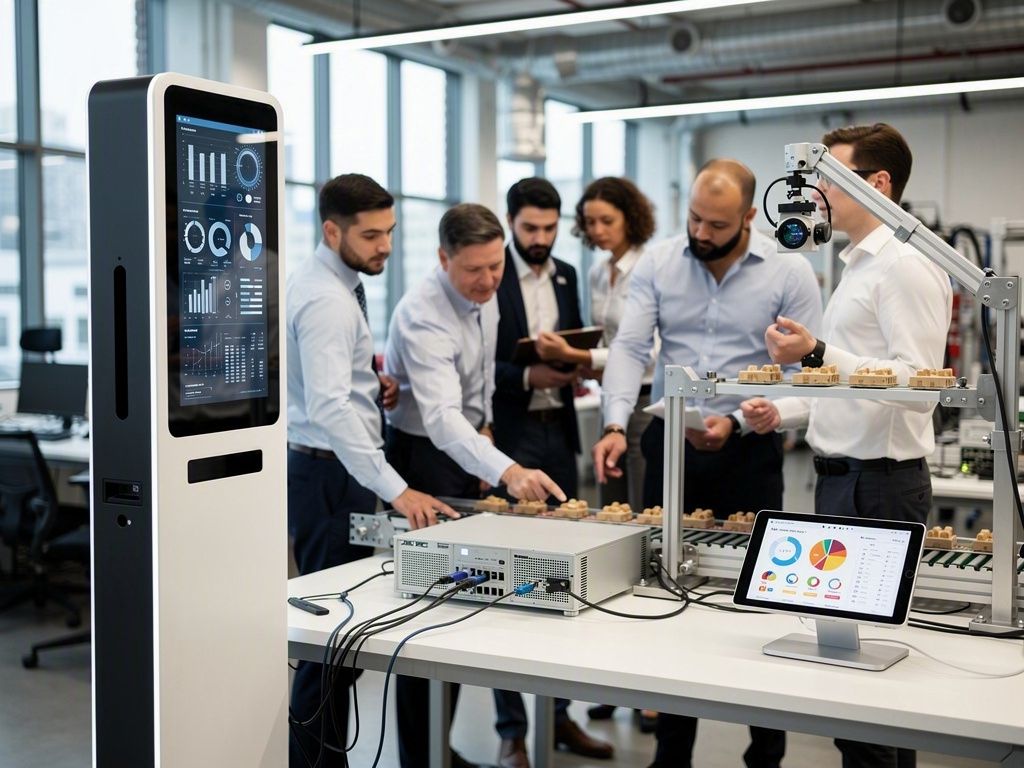 Edge AI applications in smart kiosks, manufacturing and healthcare for businesses
For many small and mid-sized businesses, the question is not whether AI is useful. The real question is how to start without overspending or building a large research team.
Two concerns come up often: upfront infrastructure cost and limited AI engineering talent. The good news is that not every deployment requires a custom-built platform from day one.
For endpoint use cases such as kiosks, smart cameras, AI workstations or monitoring devices, companies can often use widely available hardware, optimized models and ready-made development libraries. Open toolkits such as OpenVINO can help developers optimize AI models across CPU, GPU and NPU resources, reducing the risk of being locked into a single hardware or software stack.
A practical starting path looks like this:
- Pick one clear business pain: reduce inspection errors, shorten waiting time or speed up verification.
- Use data you already have: cameras, sensors, transaction logs or operational records.
- Run a small pilot for 4-8 weeks: measure accuracy, response time and savings.
- Separate sensitive data from aggregated insights: process private information locally where possible.
- Scale only after real evidence: expand when the pilot shows measurable value.
Do not begin with “which hardware should we buy?” Begin with “which decision needs to happen faster at the edge of our operation?”
Security deserves the same level of attention. The natural advantage of Edge AI is that raw data can remain closer to its source. However, when edge systems interact with the cloud, businesses still need encryption, access control, monitoring and technologies that protect data while it is being processed, such as confidential computing.
Frequently Asked Questions
- Will Edge AI replace the cloud completely? No. The most effective approach is often hybrid: edge for real-time decisions, cloud for training, storage and long-term analytics.
- Can smaller companies adopt it? Yes, especially when they start with a focused use case, existing devices and open software tools that reduce pilot costs.
- Is local AI processing always more secure? It can reduce exposure by keeping raw data local, but it still requires encryption, access control and a well-designed security model.
Conclusion: Edge AI: When artificial intelligence no longer depends on the cloud, the enterprise opportunity becomes much more practical. If you want to bring AI into real operations with a focused, scalable approach, visit fizibox.com and explore how Fizibox can support your digital transformation, AI and enterprise software journey.